
Building a premium brand and marketing it to the ideal customer is a dream of most businesses. It is also a complex project requiring the right marketing strategy.
There are many factors to be considered in branding strategy, such as the consistency of visual branding, like a logo or palette of brand colors. Also, the emotional factors, like the brand values and its connection to the customer and, the emotional motivators of customer behaviour.
Mastering both, the consistent and appealing visual look of the brand, as well as stimulating the emotional factor to awake customer’s need for brand association, is a key to build a premium brand.
What makes a great brand?
A brand is the most valuable real estate in the world, a corner of the consumer’s mind.
Institute for Brand leadership
“Your brand is what other people say about you when you’re not in the room” – Jeff Bezos founder of Amazon
Tweet
A great brand is not only a logo or product. A great brand is an experience and emotion created by the brand promise. It is trust and authenticity. It is that something that is certain in the world full of uncertainty.
To keep that image the brand has to always meet the expectation and deliver the promise, exactly the same each time. That will create the brand association and loyalty of customers.
Marketing strategy for build a premium brand
What brand you want to create and what needs of the customers you can fulfil?
Choosing the right brand type will make it easier for the brand creators to design the brand image. It will also become more clear who the ideal customer is and how to market products and services to them.
Pick your focus and personality
Think of what excites and drives you and what kind of brand do you want to create. Who is going to identify with your brand, what problems can you help to solve for your customers?
The Regular Brand
Examples: VISA, Mr Price, IKEA.
Promising solid and down to earth virtues. Identified with equality, a sense of belonging and being like everyone else. Everyday functionality, solid products for a moderate price. Brand leadership style is democratic and its strength is surviving.
The Explorer Brand
Examples: Land Rover, Jeep, Virgin.
Promising great experience and a more fulfilling life. Identify with helping people to feel freer, exploring dangerous outdoor settings, helping to express individuality. Leadership style is pioneering and its strength is autonomy.
The Innocent Brand
Examples: Disney, Coca-Cola, McDonald’s, Ivory soap.
Promising doing things the right way. Identified with nostalgia, straightforward values like goodness, morality and simple solutions. Leadership style is parental and its strength is security.
The Hero Brand
Examples: Nike, Tag Heuer, Red Bull.
The promising expert mastery that improves the world. Identified with impactful inventions, problem-solving encouragement, being strong, tough and exceptional, helping others. Leadership style is the coach and its strength is courage.
The Outlaw Brand
Examples: Harley Davidson, Virgin, MTV, Rimmel, Steve Madden, Urban.
Promising to overturn what’s not working. Identifying with a revolutionary new attitude, breaking the conventions, low to moderate prices. Leadership style is revolutionary and its strength is divergent thinking.
The Ruler Brand
Examples: Microsoft, Rolex, Gillette, Jack Daniel’s.
Promising prosperity and success. Identified with high status, power, lifetime guarantee, empowerment and protection. Leadership style is political and its strength is structure.
The Creator Brand
Examples: Lego, Sony, Swatch, 3M, HP, Adobe.
Promising to realise the vision. Identified with creativeness, self-expression and innovation, wanting to be different, DYI to save money. Leadership style is the visionary and its strength is innovation.
The Magician Brand
Examples: Axe, Smirnoff Vodka, Intel.
Promising to make the dream come true. Identified with transformative and user-friendly products, new-age quality. Leadership style is charismatic and its strength is vision.
The Caregiver Brand
Examples: Volvo, Amnesty International, Red Cross, Peace Core.
Promising to care and protect others. Identified with supporting families, helping to stay connected with others and caring for them, charitable cause, serving the public sector and giving the customer a competitive advantage. Leadership style is crusading and its strength is service.
The Sage Brand
Examples: Harvard, CNN, New York Times.
Promising to use intelligence to understand the word. Identified with encouragement to think and perform, based on scientific findings, providing expertise. Leadership style is collegial and its strength is planning and analysis.
The Jester Brand
Examples: Brands: Budweiser, Fanta, Nando’s.
Promising to have a great time full of enjoyment. Identified with a need to be different from self-important and overconfident, being fun, a sense of belonging, produced by the fun-loving company for moderate prices. Leadership style is troubleshooting and its strength is playfulness.
The Lover Brand
Examples: Revlon, Chanel, Hallmark, Alfa Romeo, Interflora, Haagen Dazs.
A promising intimate experience in surroundings you love. Identified with helping people to find finds and partners, and to have a good time with them, different from the overconfident brand, offering low to moderate prices. Leadership style is facilitative and its strength is community. Leadership style is facilitative and its strength is community. (Archetypal Branding Academy 2020 by Dr Nikolaus Eber)
Research your target audience
It is important to understand what is that really motivates customer behaviour?
When you segment your customers, their motivational needs are as important as the age, gender, location or income.
Very often one behaviour is related to another one, they are correlated.
The emotional drivers of customer behaviour
- The need for assurance: feeling secured
We need to feel safe and assured about our work, future, relationship, etc. What product can give it to us: Insurance, Medical Aid, Healthy Food. To much assurance can have a negative effect – boredom.
2. The need for variety and challenge: a sense of excitement.
We need some challenge in our lives. It’s important for our physical and emotional health. Everyone is motivated more or less by this motivator, therefore people are looking for a different products giving it to them. One person will go backpacking around the world, whereas someone else will buy a Jeep to satisfy the same need.
3. The need for connection: a feeling of belonging.
We need connection and love in our lives. Product, like Revlon, promising a great time with your girlfriends. Or, a chocolate, that you share with your love ones. Also, of course, mobile phones, that connect us with anyone we need.
4. The need for significance: a feeling that what we are/do is important.
We need to feel important and needed. People want to feel good about themselves, they want the feeling that they do well in life and be recognised for it. Product: exclusive items, like Rolex.
5. The need for growth: constant development.
We need to grow at work, grow as a person, grow financially. We grow with every new experience by learning from it. A product like learning institutions, or an University, can give it to us. Also, the gyms, to grow strength and physical fitness.
6. The need to contribute: to help others.
Helping others feels good. Contributing to sociality is important for people and organisations. A brands supporting others, look good, are more trustworthy, more likeable. Products helping us to contribute: fair trade, artisans.
7. The need for a higher purpose: assigning meaning to life.
Spiritual and religious activities, as well, as joining movements, saving the animals or the planet for example.
Read more about the Digital Branding and Brand Engagement – Digital Customer Behaviour.
What motivates customer behaviour for each type of a brand

The Caregiver Customer is motivated by contribution. Will buy from brands promising to care about another and being altruistic.
The Innocent Customers is motivated by assurance. Will buy from brands promising goodness and simplicity. Intreated in moderate to low price products.
The Regular Customer is motivated by belonging. Will buy from brands promising everyday life comfort for moderate to low price.
The Explorer Customer is motivated by challenge. Will buy from brands promising freedom and adventure. Intreated in unique products, willing to pay a high price.
The Hero Customer is motivated by significance. Will buy from brands promising making a difference and innovation. Is willing to pay moderate to high prices for products helping to reach the upper limits of performance.
The Outlaw Customer is motivated by higher association. Will buy from brands promising pioneering products. And, is willing to pay a high price for it.
The Creator Customer is motivated by growth. Will buy from brands promising self-expression promoting DIY products. Is willing to pay moderate to high price for branded creative ideas.
The Ruler consumer is motivated by assurance. Will buy from brands promising power and status for moderate to high prices.
The Lover Customer is motivated by connection. Will buy from brands promising to find love and closeness. Will pay moderate to high prices for intimate and elegant products.
The Sage Customer is motivated by growth. Will buy from brands promising to wisdom and mastery. Will pay a high price for expertise and information.
The Jester Customer is motivated by connection. Will buy from brands promising a feeling of belonging. Is willing to pay moderate to low price for fun, self-indulgent products.
Research your competitors
You need to research your market to find out what your competitors are doing and how are they doing it.
You can learn from the competition about;
- How they communicate the message with the customers?
- How they keep the customer engaged?
- How they build customers loyalty?
- What product/services they offer and what is the quality?
- What is the customer service like?
- What keywords are they using and how are they using it in their marketing campaigns?
Learn from the competition, but do not copy. You want to create a unique experience that no-one else offers.
Tweet
Choose your brand name
The brand name should be an extension of your brand strategy.
Tweet
Think about what you want to achieve by creating this brand and how are you going to achieve it? What you want to accomplish with the brand name and how it will work with your product/service?
When you’re developing a name for a business, a product or a service, you have a number of options:
- Use the founder or inventor’s name (Hewlett-Packard)
- Describe what you do (Southwest Airlines)
- Describe an experience or image (Sprint)
- Take a word out of context (Apple)
- Make up a word (Google) (marketingmo)
It is a good idea to create a selection of names and then to test them. How they sound? Is the spelling easy? Will it be possible to create a good looking logo? Will they work on URL? Those are all important questions to ask before choosing the right brand name.
Also, remember to protect your brand name.
Share your brand story
People don’t buy what you do; they buy why you do it. The goal is not to do business with everybody that needs what you have. The goal is to do business with people who believe what you believe.
Simon Sinek
After you determine who is your audience, how you will meet their needs and how you will name your brand, it is time for your brand story.
Share with your customers why you created this brand, and why you want to share products/services with them? Share your mission and your values. Explain what your brand stands for.
Your brand story is an important factor in creating brand loyalty and long-lasting customer relationship. Customers who will associate with your brand will become faithful to your brand.
Write your brand slogan
Your brand slogan should stick in your customers mind. It should be catchy and easy to remember. But also, it should evoke an image of your brand right away.
How to write a great brand slogan?
- Highlight a key benefit. Think of your mission statement and what makes your different form the competition.
- Explain the company’s commitment. What can you guarantee to your customers?
- Keep it short. One short sentence is enough, easy to remember.
- Give them a rhythm, rhyme, and ring. Make it easy to stick.
- Stay honest. Do not overpraise or over-promisse.
Famous brand slogans examples:
- Nike – “Just Do It”
- Apple – “Think Different”
- L’Oreal – “Because You’re Worth It”
- KFC – “Finger Lickin’ Good”
- Coca-Cola – “Open Happiness”
- Dunkin’ Donuts – “America Runs on Dunkin”
Choose the look of your brand
There’s no doubt that typography, photos, and icons all play a crucial role in a brand’s visual identity. But when you think of some of the world’s most famous companies, chances are it’s their color scheme that comes to mind first—whether it’s the red and yellow arches of McDonald’s or the serene green of Spotify
Canva
Establish your brand identity
The colors of your brand are a reflection of your brand identity.
Tweet
Do you want to create a feeling of relaxation? Pastels can help to achieve that.
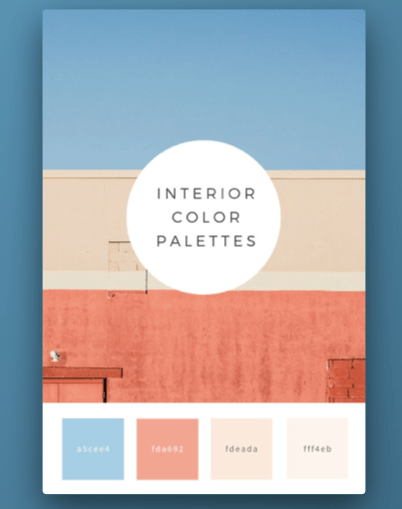
Or, maybe you are want to create a more sharp and professional look? Try this combination of black and teal.

Perhaps your brand is all about fun and enjoying yourself. Vibrant colours will help you to bring that feeling.
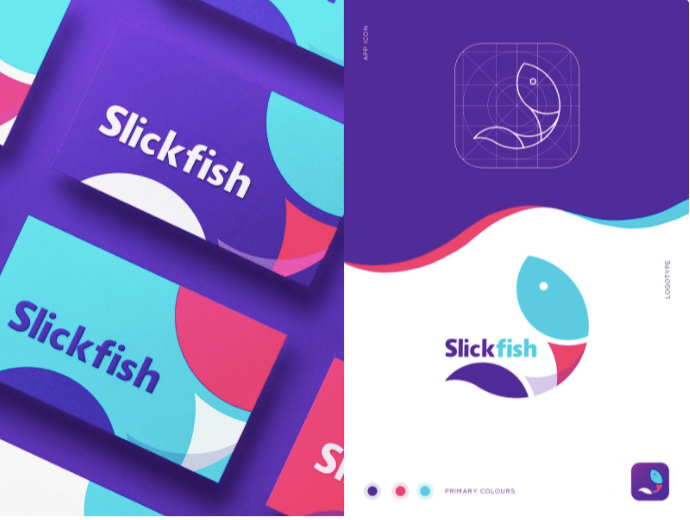
Explore color meanings
- Color influences 85% of shoppers’ purchase decisions.
- About 62‐90% of the product assessment is based on colors alone.
- Colors increase brand awareness by 80%.
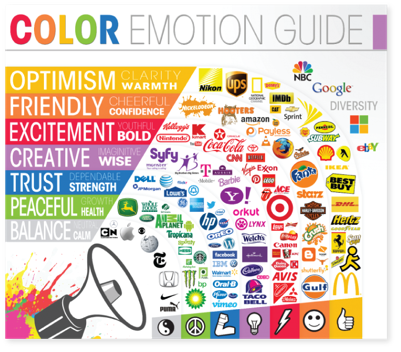
Warm colors: red, yellow, orange, pink. Those are linked to the sun, therefore evoke warmth. They awake optimism, passion and enthusiasm in people.
Cool colors: green, blue, purple, violet. In nature the colour of water, trees or grass. Those have a calming and relaxing effect.
Neutral colors: brown, black, white or grey. Powerful and pure earth tones. They are very sophisticated.
Read more about the meaning of colors in the Color meaning and symbolism: How to use the power of color.
Search for inspiration
Understanding how colors can make people feel is huge. Another thing would be to determine whether those colors really represent your brand.
Successful brands have it all figured out, find out what they are doing. Look for the winning brands in your industry and see how they are inspiring their audience with colors.
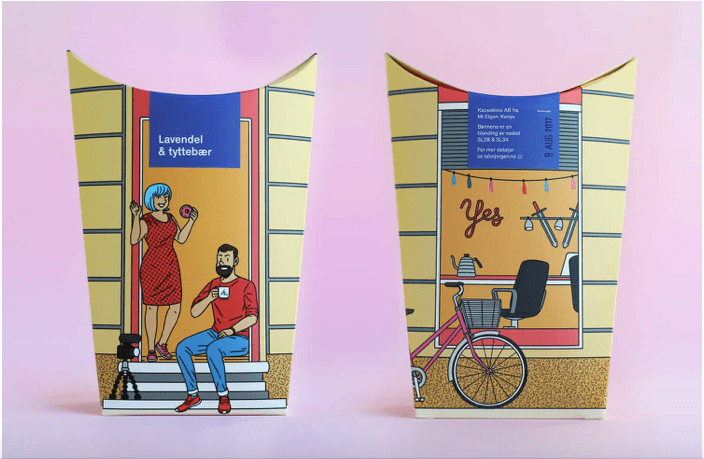
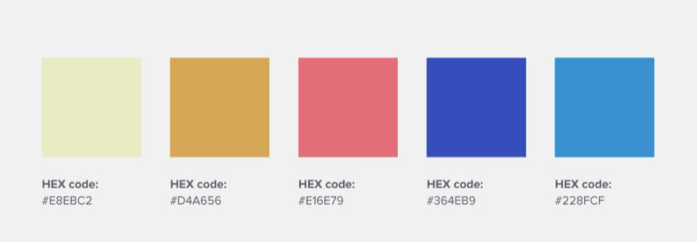
Find some examples in the 31 Inspirational Brand Colors And How To Use Them.
Pick your primary and secondary color
A brand should establish their color palette, with a full range of colors, seat as the brand identity.
The color palette will have its;
- Primary colors, which help the customers to quickly identify a brand (1-3 colors)
- Secondary colors, which highlights and compliment the primary color (1-6) colors
Combining those colors using
- Monochrome: uses different tints, tones and shades of the primary color
- Accent color: a secondary color that best compliments the primary color (debroome.com)
Test your brand colors
Test your colors to find out which colors will make people click into your content more often.
CoSchedule
What works for other brands might not work for you. You need to figure out yourself which color of call-to-action buttons/content bring the most attention and convert into clicks.
The effectiveness of your call-to-action colors will depend on the overall looks and color of the website/page. For example, if the website colors are toned down, like light blue or grey, the successful call-to-action color could be bright and lively, like orange or pink.
Design your brand logo
Designing the logo is a crucial process because you just have to get it right! You don’t want to risk your company’s sales by making common mistakes during the logo design process.
Designmantic
How to design a great brand logo?
- Keep It Simple. The logo’s design relies majorly on the font and shape choice. You don’t want your loge to be confusing and hard to understand.
- Do not copy. Your logo is a part of your brand identity. You want it to be different and not confused with other brands.
- Think Out Of the Box. Be original and creative. Create something special that your brand will be recognised by.
- Keep Your Color Scheme Simple. Too many colors look confusing and combining colors right is not that easy, keep it simple.
- Keep Fonts To A Minimum. Too much information is not necessary. A logo should be easy to understand and to remember.
Apply your branding across your business
In today’s market, a successful brand has to be consistent in communication and experience, across many applications:
- Environment (storefront or office)
- Print collateral, signage, packaging
- Website & online advertising
- Content publishing
- Sales & customer service (freshsparks)
The consistency applies to the visual branding, like your brand logo and brand colors. But also to other factors that your brand is recognised by. Make sure that your message is consistent, your values and mission doesn’t change.
Summarising
There are many great brands out there from which we can learn and be inspired by. What do they have in common? They are unique and authentic, which makes them very recognisable. They are consistent and they deliver the same quality each time. They create an emotional brand experience and offer a promise to the customer, which is always met.
Learn from the greatest but do not copy. Create your own, original type of brand, based on your personality and what needs of the customers you want to meet. Market it to the right audience, using a unique to your brand combination of colors, logo, slogan and your brand story.
Design your personal recipe for success and “Just Do It”.
To learn more about engaging and connecting with the customer read Digital Branding and Brand Engagement – Customer Behaviour and Digital Branding and Brand Engagement – Content Marketing.
To learn more about the digital brand expansion make sure to read: Digital Branding and Brand Engagement – Owned Media Marketing, Social Media Marketing Strategy For Businesses. Expand Your Online Reach and How the Search Engines can help your business? SEO Plan and successful SEM campaigns.
Thank you for Reading!
Ola van Zyl
Did you enjoy reading this post? Feel free to like and share.
Thank you!
 Online Marketing Solutions